
by Mercedes Westbrook | Aug 13, 2025 | Firehorse Media
“I almost deleted my entire manuscript last night,” a client confessed over Zoom, her voice tight with frustration. “It just feels… messy. Like it’s not a real book yet.” Here’s what most aspiring authors don’t hear soon enough: your first draft is not your book. It’s raw material — unpolished ore waiting to be refined into gold. If you expect it to read like a finished novel or a perfect memoir on day one, you’re setting yourself up for heartache (and potentially never finishing).
Why Your First Draft Feels So Rough — and Why That’s Good
Best-selling author Anne Lamott famously wrote about “sh*tty first drafts” in her classic writing guide Bird by Bird. Even celebrated novelists often cut 30–50% of their first draft before publication. Think of your first draft as a construction site. You’re pouring concrete, not painting the walls. Editing while you build is like rearranging the furniture in a house that doesn’t have a roof yet.
Expert Tip: Stop Editing as You Go
Every time you pause mid-paragraph to fix a sentence, you’re breaking the flow of your creative process. Neuroscientists call this task switching, and it’s a productivity killer — you burn mental energy every time you toggle between creative writing mode and critical editing mode. Instead: Draft fast. Give yourself permission to write badly. Mark weak spots with [TK] (short for “to come”) so you can fill them in later. Set editing days after you’ve completed your raw manuscript.
Example: What the Pros Throw Away
Stephen King, in his memoir On Writing, admits to slashing thousands of words per draft: “To write is human, to edit is divine.” J.K. Rowling’s first Harry Potter draft was far longer, slower, and messier than the polished version that became a phenomenon. She rewrote the opening chapter dozens of times before it landed on bookshelves. Moral of the story? Messy is normal. The brilliance comes in revision.
The Firehorse Method for First Draft Freedom
At Firehorse Media, we coach writers through what we call The Raw to Refined Process: 1. Unleash — Get the words down without censorship. 2. Extract — Identify the story’s heartbeat. 3. Shape — Begin cutting, refining, and restructuring. 4. Polish — Language, rhythm, and nuance come last. This approach lets you protect your creative momentum while building toward a publishable manuscript.
Final Thought
Your first draft is not a verdict on your talent — it’s the starting point of your craft. Don’t strangle your story with perfectionism before it can breathe.
Follow Firehorse Media on Instagram and LinkedIn for daily writing tips that actually get you to “The End.”

by Mercedes Westbrook | Aug 11, 2025 | Firehorse Media
Stop Waiting for the Perfect Time to Write Your Book
Waiting for the perfect time to write your book? It doesn’t exist.
A few years ago, I worked with an aspiring author who had been “about to write a book” for six years. She had great ideas, a powerful message, and expertise to share — but she kept waiting for the right moment.
When we finally began working together, I challenged her to write for just 10 minutes a day. She started messy, didn’t overthink it, and in six months, she was holding a completed manuscript.
The truth? Finished books come from starting, not from waiting for a mythical perfect time. According to James Clear, productivity expert and author of Atomic Habits, action precedes motivation — not the other way around. If you keep waiting for inspiration or free time to appear, you’ll be waiting forever.
How to Start Writing Your Book Now (Even with a Busy Schedule)
The authors who finish are the ones who:
-
Start small: Ten minutes a day is enough to build momentum. That’s 70 minutes a week — over 5 hours in a month.
-
Ignore the “edit monster”: Get your thoughts down first; refine later.
-
Focus on progress, not perfection: Every rough draft is a step closer to a finished book.
- Join a writing circle to keep you on point and motivated (ask me how).
As Anne Lamott says in her writing classic Bird by Bird, give yourself permission to write “sh***y first drafts.” This is how most successful nonfiction books begin — imperfectly.
The Business Case for Starting Now
If you’re an entrepreneur, coach, or consultant, your book is a business card that never expires. It builds authority, opens doors to speaking opportunities, and keeps attracting clients long after publication.
Publishing consultant Michael Hyatt calls a book “a permanent business card that amplifies your influence.” If you start today, you could be holding that influence in your hands within a year.
Your Next Step
Every day you delay is another day your book could be working for you — attracting opportunities, building your authority, and sharing your story with readers.
Whether you want to write a nonfiction book to grow your business or share your personal expertise with the world, the best time to start is now. Even 10 minutes a day can change everything.
I’m Mercedes Westbrook, a book coach and media/marketing professional. I help aspiring authors go from idea to published book — with clarity, strategy, and encouragement every step of the way.
Start your book today. Let’s get your story out of your head and into the world.
About Mercedes Westbrook
Mercedes Westbrook is a book coach, media and marketing professional, and founder of Firehorse Media. With years of experience helping authors craft impactful nonfiction, she combines strategic marketing insight with hands-on guidance to help clients bring their stories to life. Her work has been praised by authors and entrepreneurs alike for its clarity, encouragement, and results-driven approach. Learn more at www.firehorsemedia.co.za

by Mercedes Westbrook | Aug 10, 2025 | Firehorse Media
Want a business card that works while you sleep?
Three years ago, a coach I worked with published her first nonfiction book. She wasn’t a celebrity. She didn’t have a massive social media following. But she did have expertise, a story, and the courage to put them into words. That book still brings her new clients today. It works quietly in the background — on bookshelves, in offices, in handbags, on Kindle devices — introducing her to people she’s never met.
Why This Works:
Marketing leaders like Seth Godin and Ann Handley have said it again and again — authority comes from showing up, sharing your knowledge, and proving your credibility over time. A book does that in a way no other marketing tool can.
- It positions you as an expert. A published book is tangible proof that you know your subject.
- It opens doors. Speaking gigs, media features, and client referrals often follow.
- It keeps selling for you. Long after the launch, your book continues to circulate, working as a silent ambassador for your business.
The Expert Perspective:
Michael Hyatt, leadership mentor and author, describes a book as “a permanent business card that amplifies your influence.” He’s right — your book becomes a multiplier, extending your reach far beyond what you can do in person.
Your Next Step:
If you’ve been thinking about writing a book, stop waiting for the “perfect” moment. The perfect moment is the day you start. Whether you want to self-publish or go the traditional route, the key is getting your expertise out of your head and into a form that can work for you for years to come.
Let’s make your book happen. Visit www.firehorsemedia.co.za to get started.
About Mercedes Westbrook:
Mercedes Westbrook is a book coach, media and marketing professional, and founder of Firehorse Media. With years of experience helping authors craft impactful books, she combines strategic marketing insight with hands-on guidance to help clients bring their stories to life. Her work has been praised by authors and entrepreneurs alike for its clarity, encouragement, and results-driven approach. Learn more at www.firehorsemedia.co.za
by Mercedes Westbrook | Mar 11, 2025 | Firehorse Media
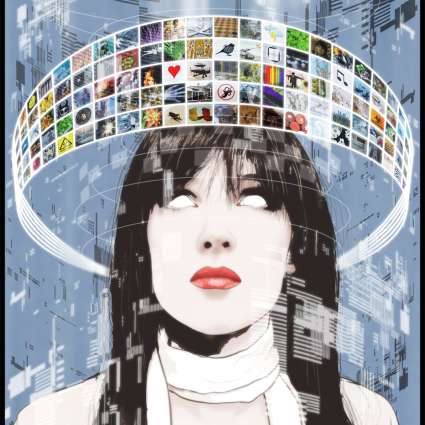
Do you ever feel like no matter what you do, it’s never enough? Like there’s this invisible voice in your head whispering (or sometimes shouting) that you’re not worthy, not lovable, not good enough and you are never going to get ahead? If so, you’re not alone.
For many of us – especially those who have experienced childhood trauma or abuse – self-love feels foreign, almost impossible.
We learn to survive by being small, by pleasing others, by keeping quiet, by working harder. But that’s not love. That’s fear. And the longer we stay trapped in that mindset, the more disconnected we become from ourselves.
I know this to be true because I ran from my childhood trauma for decades. I was always partying, or working, or in a relationship. I avoided stillness and silence, distracting myself with activities outside of myself so I could block out the voice inside; all the while avoiding self-care and self-love, fighting life and the feelings and memories I wanted to shut out, running like to wind to avoid the pain of betrayal and abuse. Terrified of what I may uncover inside my Pandora’s box.
So, how do we break free from this burden? How do we stop the downward spiral of avoidance of self-care and the toll of self-criticism and start treating ourselves with the love we so desperately seek from others?
Let’s talk about it.
The Downward Spiral: Why We Feel Unworthy
Psychologist Nathaniel Branden once said, “Self-esteem is the reputation we have with ourselves.” And for many of us, that reputation is built on years of self-judgement, guilt, and shame.
I remember working with a woman – let’s call her Sarah – who had spent her entire life believing she wasn’t good enough. As a child, she was constantly criticized by her parents. If she got an A, they asked why it wasn’t an A+. If she spoke up, she was told she was “too much.” By the time she reached adulthood, she had internalized these messages so deeply that she couldn’t accept a compliment without feeling like a fraud.
Sarah’s story isn’t unique. Trauma, neglect, and emotional wounds teach us that love is conditional – that we have to earn our worth. And so, we hustle. We perfect. We people-please.
But here’s the truth: Love isn’t something you earn. It’s something you remember.
And the first step is realizing that the voice in your head is telling you otherwise. That voice is not yours. It’s a learned narrative. And just like it was learned, it can be unlearned.
Recognizing the Lies Your Mind Tells You
If you struggle with self-love, chances are your inner dialogue sounds something like this:
- “I’m not smart/pretty/successful enough.”
- “I’ll be happy when I lose weight/get the promotion/find a partner.”
- “If people really knew me, they wouldn’t love me.”
- “I don’t deserve happiness.”
These are not facts. They are beliefs – beliefs that were handed to you by other people. Maybe a parent, a teacher, an ex-partner, or society itself.
Dr. Kristin Neff, a leading researcher on self-compassion, explains that self-criticism comes from a survival mechanism. Our brains evolved to scan for threats – and for many trauma survivors, the biggest “threat” is rejection and shame.
But here’s what you need to ask yourself:
What if I’m wrong about myself?
What if the story you’ve been telling yourself isn’t true? What if you are already enough, and the only thing standing in your way is the belief that you aren’t?
How to Start Loving Yourself (Even If You Don’t Know How)
If you’ve spent years (or decades) being hard on yourself, self-love won’t happen overnight. But it can happen. And it starts with small, daily choices.
- Treat Yourself Like You Would a Child
Imagine a five-year-old standing in front of you, crying because they feel unworthy. Would you tell them they’re a failure? That they don’t deserve love? No. You would comfort them. You would remind them how precious they are.
You still have that child inside you. Talk to yourself the way you would talk to them.
- Question the Voice of Self-Doubt
When you hear that inner critic say, “You’re not good enough,” pause and ask:
- Whose voice is this?
- Is this thought helping me or hurting me?
- What would I say to a friend who had this thought?
You don’t have to believe every thought you have. In fact, most of your negative self-talk is habit, not truth. It’s a loop that our egoic mind feeds itself.
These negative thought patterns are often referred to as cognitive distortions which can trap us in cycles of self-doubt and anxiety. The ego, as conceptualized in psychology, serves as our conscious identity, mediating between our innate desires and societal expectations. However, it can also ensnare us in negative thought loops. Aaron Beck, a pioneering psychiatrist, identified that individuals often experience “automatic, spontaneous and seemingly uncontrollable negative thoughts” about themselves, their environment, and their future. He termed this phenomenon the “cognitive triad,” which is central to his cognitive theory of depression. In simpler terms, he coined the idea that what one thinks becomes reality.
Science has proved that a significant portion of our daily thoughts are repetitive and negative. Neuroscientist Dr. Simone Boer explains that up to 80% of our thoughts are negative and often repetitive, stemming from deep-seated beliefs formed during childhood.
These automatic thoughts can distort our perception of reality, leading to patterns such as overgeneralization, filtering out positive experiences, and catastrophizing situations. Such distortions reinforce negative beliefs and perpetuate a cycle of negativity.
To remedy this, Beck broke from traditional psychiatry to incorporate healing through social learning, stress inoculation training, problem solving training, and self-control therapy.
The Waldorf education system, founded by Rudolf Steiner in the early 20th century, is based on a holistic, developmental approach to learning in children. It integrates movement, music, storytelling, and experiential learning to deeply engage children in mind, body and spirit. The goal is not just to teach information but to embody learning – to engage the whole being: head (thinking), heart (feeling), and hands (doing), giving young learners a head start in life. As we know, it is never to late to learn something new.
- Create a Self-Love Ritual
Self-love isn’t just a mindset; it’s a practice. Find small ways to care for yourself every day:
- On waking first thing in the morning, acknowledge the world with a smile: you have awoken to a new day, a new world to start afresh. Write down one thing you love about yourself, in a journal you keep by your bed.
- Take a few minutes to breathe deeply and check in with your body. Connect with your heart space and give it gratitude. Be thankful for your body just the way it is; for moving you through your day or; for the illness or pain that has arrived as a lesson. Acknowledge your brain for the amazing operating system that is it, which helps you navigate life.
- Start a “self-kindness” journal where you write words of encouragement to yourself. If you find this difficult at first, then use your imagination to dream of everything you want to achieve in your life – connect to the image of your future self, one that is confident, successful, joyful. You can add positive imagery you have cut out from an old magazine, or glue in old concert tickets which remind you of a happy occasion; perhaps some Spring flowers pressed into the pages that carry a reminder of a walk you took in Nature.
- Speak an affirmation out loud: “I am worthy just as I am.” Search for affirmations that you can relate to that lift you up and help you to find courage in your day. Take the time to – even if it’s a few short minutes – to connect with the words, bringing them into your mind and your heart.
- Let Go of the Need for Approval
One of the biggest blocks to self-love is seeking validation from others. We think, If they love me, I’ll finally love myself. But self-worth isn’t built externally.
Try this exercise: Write down three things you value about yourself that have nothing to do with other people’s opinions. Start the journey withing to learn more about yourself. We need to be aboe to stand alone from the crowd, searching internally for our unique set of values and principles of what we believe to be acceptable in life. Remind yourself that your worth is not negotiable.
- Heal the Wounds, Not Just the Symptoms
Self-love is deeper than affirmations and bubble baths. If your self-worth was damaged by trauma, it might take deeper work – therapy, trauma processing, or inner child healing – to truly reconnect with yourself.
In the book, The Body Keeps the Score by Bessel van der Kolk or Radical Acceptance by Tara Brach we are offered powerful insights into healing past wounds. We can learn deeper modalities which deal with the inner critic and the wounded child by fostering self-compassion and inner peace and an empowered inner voice.
- Befriend your inner critic: recognise and acknowledge your inner critic, give it a name. Ask yourself: I hear the voice saying I am not good enough. I wonder what it’s trying to protect me from?
- Be curious rather than judgemental. Ask: What does this part of me fear will happen if I stop criticising myself?
I share deeper insights on my website about the Mother Wound and Father Wound and finding the courage to heal our origin relationships. Before we can truly set ourselves free we must accept, acknowledge and appreciate our childhood and what it is meant to teach us.
But let’s just deal with today, learning to love yourself in the NOW
What If You Loved Yourself Anyway?
I want to leave you with a question:
What if you decided – right now – to love yourself exactly as you are?
Without the stories, the memories or excuses. Not when you lose weight. Not when you accomplish more. Not when someone else validates you. But now.
Are you able to look within and see your own beautiful uniqueness in this moment? Can you appreciate that you are a one-of-a-kind combination of experiences, biology, soul essence, and personal perception that has never been before and never will be repeated again? That your uniqueness is your own personal blueprint made up of lived experiences, intuition, creativity, genetics, brain wiring, the way you process emotions and the way to you connect to others? Even if two people experience the same event, their perception and meaning-making will be different. Your story, your way of seeing life, is only yours.
At the deepest level, your essence – the part of you that exists beyond time, labels, or conditioning—is what makes you unlike anyone who has ever lived or will ever live again. You are a singular, unrepeatable soul.
Self-love isn’t about being perfect. It’s about being real. It’s about showing up for yourself, even when you feel unworthy.
Because the truth is – you have always been enough. You just forgot.
And it’s time to remember.
We are living in epic, transformative times, where humanity is awakening to its true nature. The old structures are crumbling, making way for a deeper understanding of who we are – divine souls, powerful beyond measure, each carrying the spark of creation itself. As we shed illusions and conditioning, we remember that we are not small or separate but connected, luminous beings with the ability to heal, create, and shape reality. This is the great awakening – a return to our essence, our sovereignty, our godspark.
Final Thoughts: Your Next Step
If you’re serious about shifting the way you see yourself, if you want to grow out of your small spaces, shed old skin and face the world anew, take action:
- Challenge one negative thought per day. When self-doubt creeps in, question it. Ask yourself, is this really true? Imagine you are on a debate team, challenging your own negative thoughts with real-life evidence that proves them untrue. A wise adage says, what we focus on expands – whether it’s worry, negativity, or doubt – while what we observe with clarity and truth often dissolves. Fear is merely smoke and mirrors, testing your resolve. You are more than enough and fully capable, but perhaps you’ve never truly confronted these false beliefs about yourself. Be willing to be wrong about your limitations.
- Practice self-compassion. Be kind to yourself, even when it feels unnatural. The law of the Universe teaches that we must first imagine and feel something before we can create it. As creators, we use our imagination to shape new realities—fake it till we make it. Each morning, I wake up and smile, setting the tone for my day by telling my mind and body how I want to feel. The first thoughts of the day matter—notice them, and if needed, change the narrative. Life is a gift, and the natural world—from singing birds to sunshine and rain—exists to remind and encourage us. I challenge you to get creative!
- Start a new habit: Throughout the day, catch your negative thoughts and use a grounding action to shift your energy. Try taking three deep breaths while touching each finger to your thumb, creating a physical reminder to reset and uplift your vibration.
- Reconnect with your personal power: When you feel powerless, reach within. Reread your CV or journal to remember your accomplishments and strengths. Look through family photos to remind yourself of the love and support in your life. Reach out to an old friend who sees your true essence – sometimes, a small boost is all we need to break free from the loop of negativity.
- Your environment shapes your mindset: Take a look around – does your space reflect clarity and self-worth? Small improvements can create a big shift. Declutter your wardrobe, clean your windows, polish your car, mend broken items, or make healthier food choices. Set one realistic, measurable goal, like drinking 8 glasses of water today. It may seem simple, but hydration impacts mental clarity, energy levels, and overall well-being. Small shifts lead to powerful transformation.
- Before settling into sleep at night, ask yourself What does my Soul want me to know? Our dreams are powerful and our sub-conscious brings us subtle messages to guide us in our path. If you are interested in learning how to connect to your Soul voice, I offer an online course here.
Healing is possible. And so is self-love.
I congratulate you for being curious enough to have made your way to the end of this article. Now congratulate yourself, acknowledgement is half the journey to self-discovery. Keep going!
#selflovetips

by Mercedes Westbrook | Jan 14, 2025 | Business, Lifestyle, Venues
My dinner date at BOCCA, the Italian word for ‘mouth’ taught me two things: don’t be late for a date with a German, and BOCCA proprietors Guido and Adnana Brambilla mean to tantalise every single one of the 10,000 taste buds in your mouth.
Find BOCCA at the junction of Bree and Wale street in Cape Town’s trendy CBD just a short stroll up from the V&A Waterfront to share in romantic sunset dinners, family-gathering celebrations, or if you are one of the city’s many singular tech-head imports needing a shot of divine sustenance during one of your coding marathons… we saw all three varieties of patrons there on its split-level interior where the focus is firmly on fine food creation rather than just fancy interiors.
CELEBRATE WITH TASTE
Once you’ve dived into your first urban Italian cuisine experience offered up by maestro chef Guido, you will be loudly joining the buzzing fray as people revel in its flavour sensations offered up in a snappy array of sublime food, conversation and laughter.
BOCCA has an Italian calling for inspiring a food celebration, as only the Italians know how, delivered to your private table. It’s a recipe for never leaving and always returning. As petite hostess Adnana says, “You can come by yourself and sit at the counter for a glass of wine and a few small plates or arrive as a group and experience a selection of dishes. It’s really a place for people to connect over food.”
MENU MOZZAFIATO
There by invitation of a local foodie friend, my dinner partner and I were served a special BOCCA chef’s table, with each dish accompanied by detailed explanations from master chef Guido, so I benefited from an Italian lesson in the finer details of the variety and preparation of our particular dishes.


Putting his new menu into context, Guido says: “It’s all about uncomplicated Italian flavours, the kind you would enjoy if you were invited for dinner in an Italian household.”
We felt right at home at BOCCA with both of us delighting in each dishes unique sampling.
Guido and Adnana are particularly intent on sourcing the best local ingredients for their menu at BOCCA, adding their Italian flair to locally sourced South African products which they acknowledge as being of top-notch quality.
The local Stracciatella with roasted cherry tomatoes and confit eggplant was a first for me and I nearly swooned. Rich, creamy and almost the consistency of thick yoghurt, I was in heaven. The Polpo of Atlantic octopus with potatoes and basil pesto – a classic Mediterranean-inspired BOCCA dish was as breath-taking.
The star of the show for me however was the Polpettine; interesting for someone who ricochets between thoughts of turning vegetarian and eating all the crackling off the roast pork. Polpettine is a finely ground meatball of beef, pork and lamb to be dipped into a fresh ‘mayo verde’. Each bite is a series of new tastes unfolding one on top of the other and I couldn’t stop going back for more, nicking more than my fair share of it.


Before the arrival of the Brambilla’s, BOCCA was famous for its pizza and nothing has changed. With their imported Acunto oven – which cooks pizzas in 90 seconds, at temperatures topping 450°F – the dough sees a process of slow fermentation before being thrown by hand and pushed into its fiery heat.
The latest member of the BOCCA pizza family is their little PIZZETTE which is rolled smaller – about 16cm across – than a traditional pizza, and which means you can enjoy your favourite pizza flavours while still having space to try a variety of other new dishes served at the table.
We shared the Amatriciana with smoked cheeks of pork and pecorino on a puffy yet crisp base which was so ridiculously delicious it’s hard to view it as mere pizza – at least the takeaway sort of pizza I have previously come to know.
DOLCE ENDINGS
Not being a sweet tooth, I decided to forgo dessert for another glass of Sauvignon Blanc complements of Cape Town’s accessible Uber services but my dinner partner absolutely raved about the Tiramisu with Mascarpone Cream, declaring it the best he has ever tasted; high praise indeed with my own odious time-keeping long forgotten after a bacchanal of such fine fare.
Even as the happy last patron leaves BOCCA and midnight prepares to settle over the city, Guido is setting the next day’s fare in motion, placing his larger cuts of beef, lamb, poultry and port into the heat of the pizza oven for gentle slow roasting in preparation to start another staple Italian day in the kitchen.

Expect the menu of this upscale eatery to change four times a year as Guido works the South African seasons with his own brand of passion, dedication and hands-on approach extended with authentic Italian hospitality for every and all types of diners through their welcoming BOCCA doorway. It’s a guaranteed to be mouth-watering with the perfect selection of small plates ideal for sharing.
BOCCA is open for lunch and dinner from Monday to Saturday from noon until 22h00 with last orders are taken at 21h30. Visit their website at https://bocca.co.za/.
Connect with Guido and Adnana Brambilla’s BOCCA on social media via @BoccaCT on Twitter; @boccaCT on Facebook; and bocca_ct on Instagram
Firehorse Media is a South African communications and PR consultancy owned and managed by Mercedes Westbrook, whose career as a journalist, editor, managing editor and communications consultant spans 22 years experience in the print and digital industry. Email her on mercedes@firehorsemedia.co.za or C:+27 789707633.


